

Earlier this year the Everett, Washington City Council updated the City’s Massage Ordinance to crack down on what appeared to be a boom in the illicit massage business. New laws were passed and an education campaign launched. Today the City of Everett announced the first results of that enforcement and education effort. Here’s the press release issued.
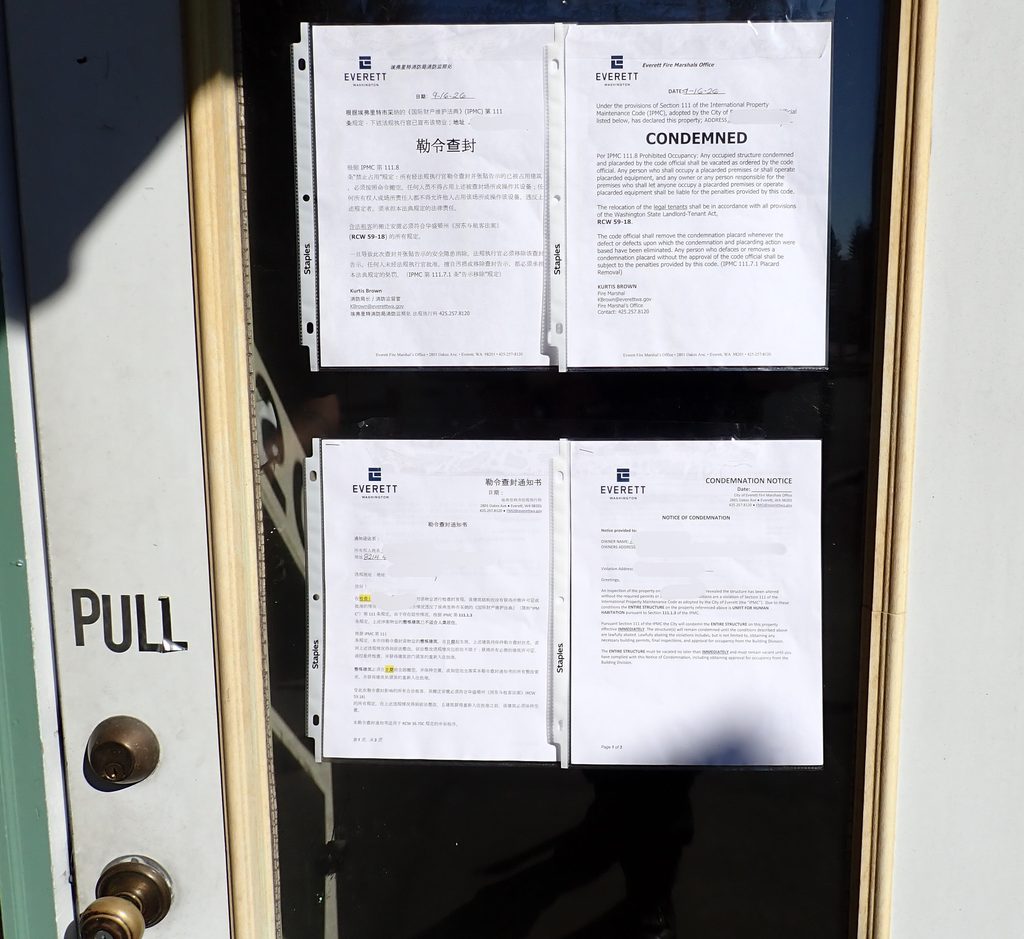
This year, the Everett Police Department identified 44 locations within the City of Everett suspected of operating illicit massage businesses (IMBs). Everett’s police and fire departments – with support from the Washington State Office of the Attorney General – are working to address the serious public health and safety concerns these businesses pose to both their workers and the greater community.
“We’ve made significant progress in shutting down massage businesses suspected of illegal activity in Everett – and we’re committed to continuing this work,” said Everett Mayor Cassie Franklin. “I’m grateful to our police, fire department, CARE team and the Attorney General’s Office for their coordinated effort to hold business owners accountable while also ensuring workers know that support and resources are available.”
Everett Police identified suspected illicit massage businesses through online reviews, advertisement and community tips. These businesses use the appearance of providing legitimate massage services to conceal illegal activity, including prostitution. The City prioritized this effort due to the significant impacts IMBs have on the community and concerns that workers at these types of illegal establishments may be victims of exploitation or trafficking.
Additionally, these businesses often include areas of unpermitted, haphazard modifications that pose life-safety risks. This is of particular concern, as some of these spaces are used by workers for sleeping or habitation, contrary to building and safety codes.
At the direction of Mayor Franklin, staff brought forward updates to the Everett Municipal Code to strengthen the City’s ability to address these illegal businesses and in June, the Everett City Council approved them (EMC 8.72 Massage and Reflexology). These changes are intended to protect public safety, support licensed businesses and help prevent criminal activity associated with unlicensed operations.
Key changes in the ordinance included installing penalties for operating without required licenses and certifications, allowing the City to inspect businesses to check for compliance, and creating penalties to hold landlords accountable if they knowingly rent to businesses breaking these laws.
Everett’s approach to addressing illicit massage businesses:
To prioritize the safety of those at risk of being exploited within the larger networks of IMBs, Everett Police, Everett Fire, and the Community Alternative Response in Everett (CARE) team, collaborated to develop a holistic approach to address these illegitimate operations in partnership with the Washington State Office of the Attorney General. The approach focused on:
- Unlicensed massage services
- Inadequate business credential
- Fire and building deficiencies
- Suspected reoccupation after closure or condemnation
- Areas used for sleeping or habitation inside of commercial properties.
If concerns of trafficking were encountered during inspections, they were to be investigated via standard pathways. The goal was to prioritize employee and victim safety while simultaneously providing access to social resources. Following passage of the ordinance, the Everett Police Department launched an education campaign. Its purpose was to make sure affected businesses had clear information about the new requirements, and time to come into compliance, before any enforcement began.
“I want to thank our investigators and officers for their careful work beginning in the earliest phases of this process,” said Everett Police Chief Robert Goetz. “Throughout the course of this operation, they remained committed to transparency, professionalism, and ensuring all parties access to services if needed.”
Officers attempted in-person contact with all 44 suspected IMBs. Bilingual officers spoke directly with employees and operators. Printed materials were provided in the primary language of those present and included a summary of the ordinance and resources on workplace rights, working conditions and human trafficking. Where no contact was made, materials were left at the business and/or mailed to the operator.
The Criminal Justice Division of the Attorney General’s Office collaborated with the City of Everett to address the issue of illicit massage businesses. The AG’s Office used information provided by The Network, a data-driven nonprofit that identifies illicit massage businesses and supports law enforcement investigations. Based on that information, the AG’s Office contacted the landlords of 23 businesses in Everett to inform them that their tenant may be operating an illicit massage business in violation of
State and local law.
The AG’s Office also provided information about human trafficking. In response to these letters, 11 businesses closed and vacated. The AG’s Office remains in communication with landlords of businesses that have not closed to ensure that they follow the law. “This coordinated enforcement protects people from trafficking and helps create a safer environment for residents and businesses in Everett,” Attorney General Nick Brown said. “I’m proud of how our team has collaborated with the City of Everett to enforce our laws, prioritize public safety, and reduce crime.”
Inspections of businesses highlighted numerous life safety risks and issues:
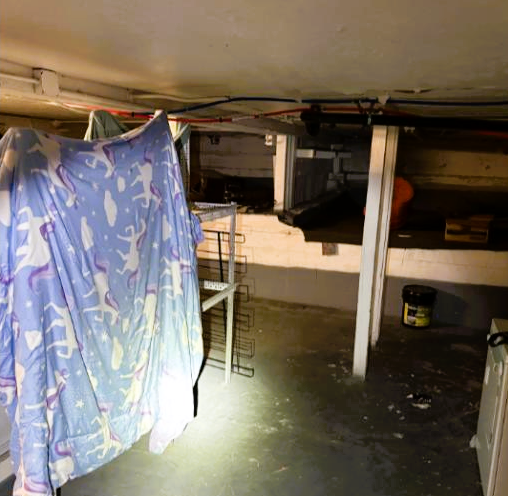
Following the education campaign, the Everett Police Department and the Everett Fire Department’s Fire Marshal’s Office conducted inspections at the businesses that were still in operation. The Fire Marshal’s Office joined in part due to concerns that people may have been living and sleeping at locations that did not meet minimum fire and life safety standards. Each business received the same standard fire inspection conducted at any other business in Everett.
During inspections, fire inspectors identified a range of fire and life safety hazards, including electrical and plumbing work completed without permits, extension cords used in place of permanent wiring, fire extinguisher deficiencies and dryers venting into walls and attic spaces. Inspectors also found blocked exits and improper door hardware that could lock people inside the
building, requiring special tools or knowledge to exit during an emergency, which fire code does not allow in commercial spaces.
“Fire and life safety inspections help us find hidden hazards before an emergency happens,” said Everett Fire Marshal Kurtis Brown. “Those hazards put occupants, neighbors, and responding firefighters at greater risk if a fire breaks out. When we find fire code violations, we work with business owners on the corrections needed to stay open or reopen safely, and we refer any building, code compliance, or licensing concerns to our city partners.”
To date, the Everett Fire Marshal’s Office and Everett Police Department have inspected 28 businesses. Eight of those businesses were condemned, and two others are under review for possible further action. Condemnation means a building has been found unsafe to occupy, often because it was altered without the required permits and approvals. Condemned buildings must be vacated immediately and remain closed until the necessary corrections are made and approval to reopen is granted. Three of the eight condemned businesses have been allowed to reopen after correcting immediate fire and life safety hazards and are continuing to work toward full compliance. Police issued 10 citations for violations of EMC 8.72 during initial inspections.
Throughout the checks, a member of the Community Alternative Response in Everett (CARE) Team was available on site to connect employees to resources if needed. Efforts to address the public health and safety concerns these businesses pose to both their employees and the greater community is still active and ongoing. The City of Everett is dedicated to preventing illicit operations and will continue to pursue this complex issue while prioritizing community safety.
Printed materials distributed during the education campaign are available here.